
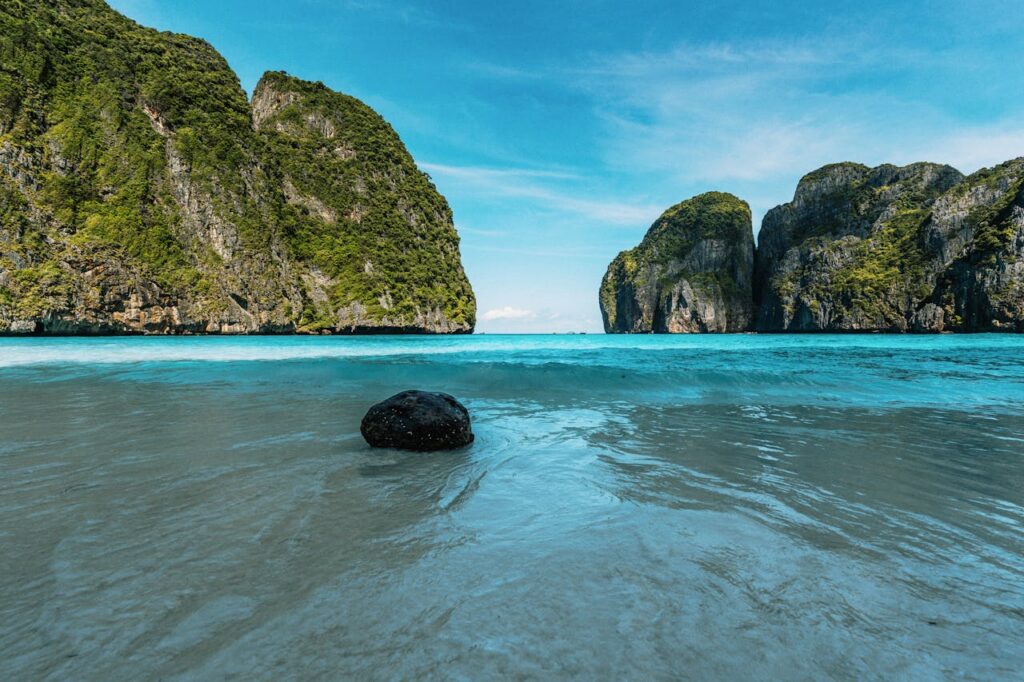
Phi Phi Islands Beaches: Every Beach Ranked and Reviewed
Table of Contents
Not all Phi Phi Islands beaches are created equal — and the difference between a magical day and a disappointing one often comes down to knowing which beach suits you, when to visit it, and how to actually get there. This guide covers every beach worth your time on both Phi Phi Don and Phi Phi Leh: the iconic, the hidden, the overrated, and the genuinely unmissable.
What You Need to Know Before You Hit the Sand
The Phi Phi archipelago has six islands, but the beaches you’ll visit fall into two categories: those on Koh Phi Phi Don (the inhabited island where you stay) and those on or near Koh Phi Phi Leh (the protected, uninhabited island that’s only accessible by boat tour).
For full ferry schedules and routes, see our guide to getting to Phi Phi Islands.
Getting between beaches on Phi Phi Don is done almost entirely by longtail boat taxi. There are no roads connecting most beach areas — the island’s interior is steep limestone jungle. Budget around 100–300 THB (≈ $3–$9) per person per ride depending on distance, or 500–1,500 THB (≈ $15–$44) to charter a longtail for a half-day.
Refer to our Phi Phi map to get your bearings before arrival.
A key logistical fact most guides gloss over: tides matter enormously here. Several beaches, especially Loh Dalum, change dramatically between high and low tide. At low tide, you can be left sitting 100 metres from the waterline on hard-packed sand. Check tide times before you plan your beach day — the difference is striking.
The Beaches of Koh Phi Phi Don
Loh Dalum Bay — The Social Hub of the Island
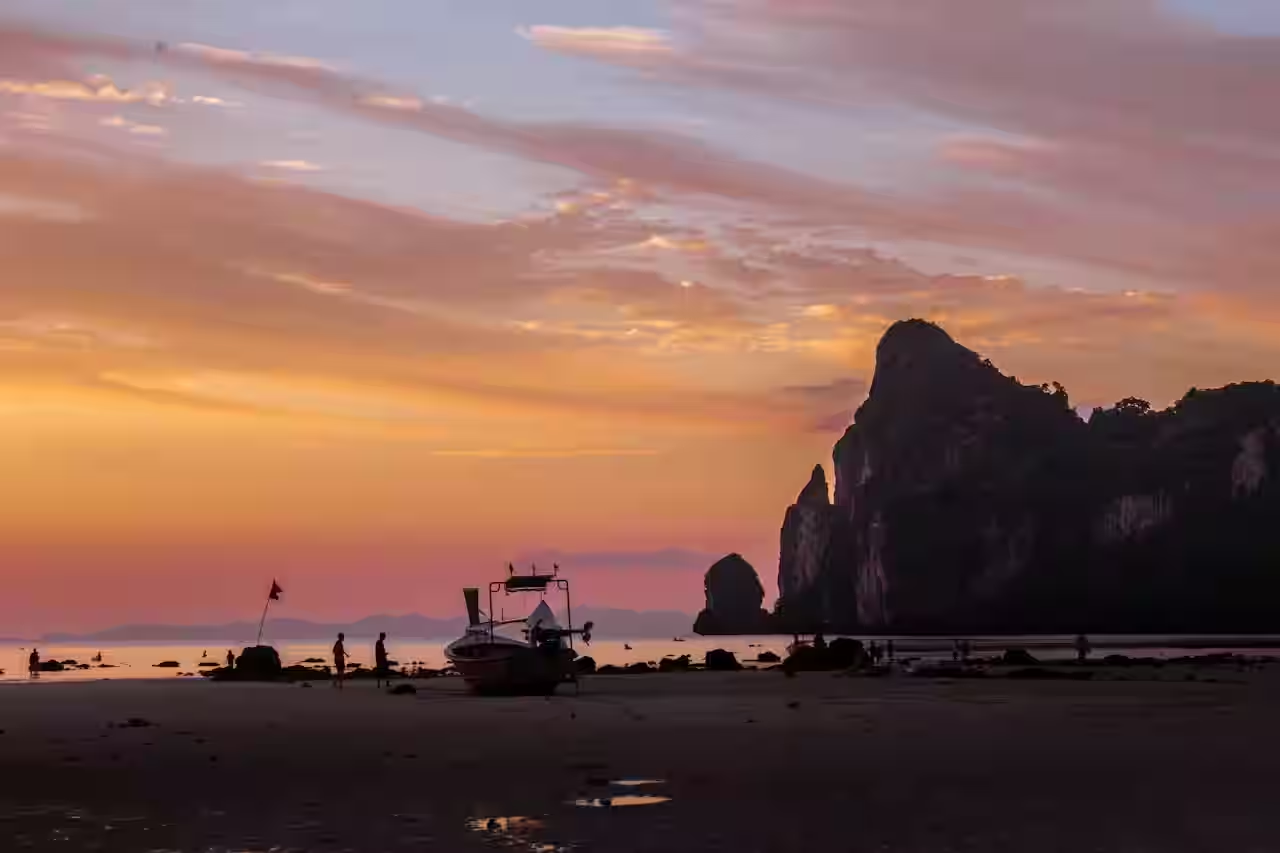
Loh Dalum is the postcard beach. It’s the one you see in every aerial shot of Phi Phi — a long, curving arc of white sand framed by jungle-covered limestone, with the isthmus squeezed between it and Tonsai on the other side.
During the day, it’s relaxed enough: sunbeds, beach bars, kayak rentals around 150–200 THB/hour, and SUP boards. The water is warm and calm inside the bay — ideal for paddling, less ideal for serious swimming because of how shallow it gets at low tide.
The tides at Loh Dalum Bay are very noticeable. At high tide there’s a nice section of sandy beach, but at low tide it can be a long walk to reach the sea — quite a contrast worth seeing at both stages.
After dark, Loh Dalum transforms. The beach bars crank up, fire shows start around 9pm, and the stretch closest to Tonsai Village becomes the island’s party zone. If you want a quiet evening, this is not your corner of the island. If you want to stay within walking distance of everything and don’t mind the energy, it’s ideal.
Best for: First-timers, social travellers, convenient access to restaurants and bars.
Avoid if: You want peace, quiet mornings, or you’re a light sleeper.
Tonsai Beach — Where You Arrive (But Probably Shouldn’t Linger)
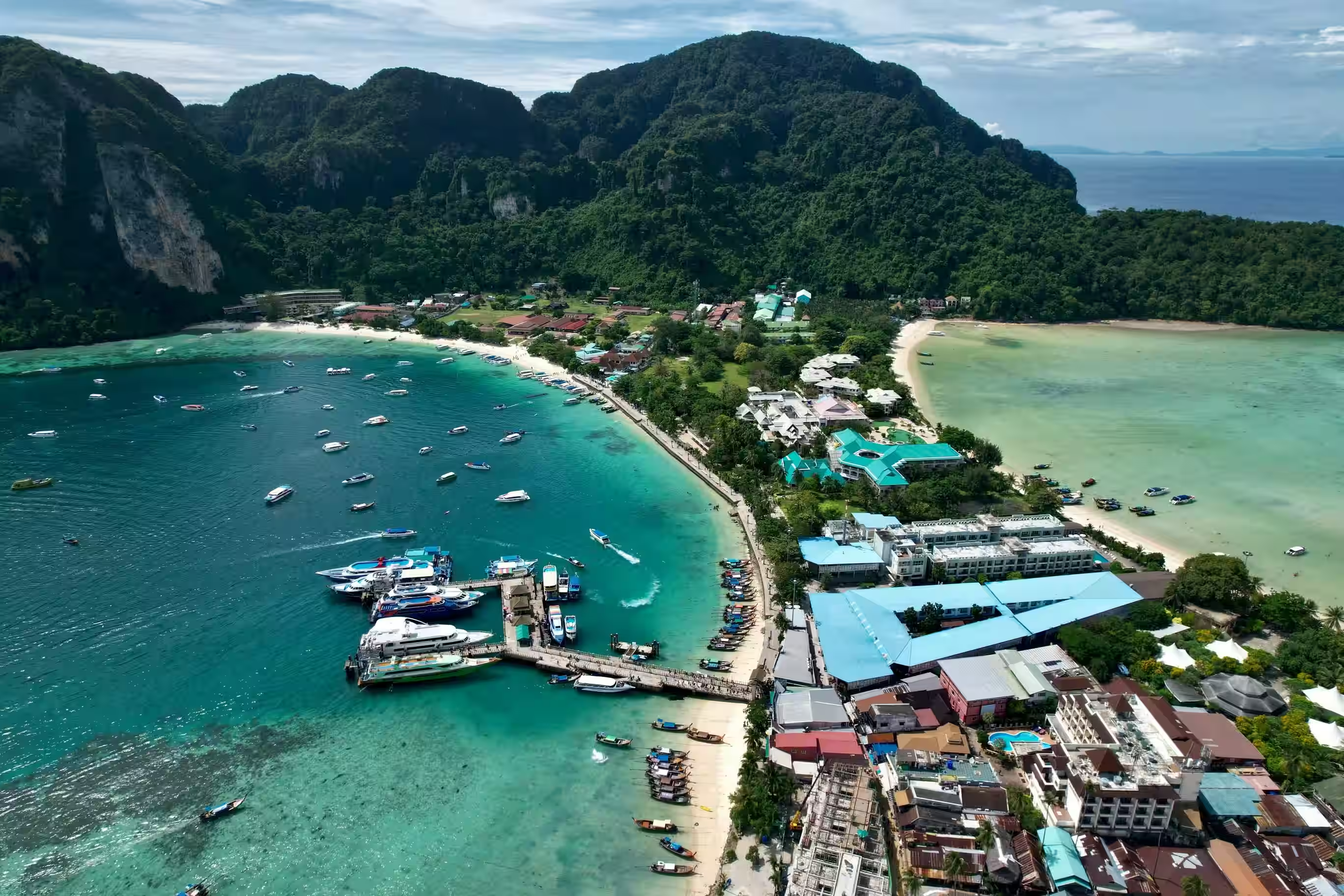
Tonsai Beach is the main arrival and departure point for visitors to Phi Phi Don and day trips around the islands — which is exactly why it’s often crowded and primarily serves as a parking lot for longtail boats.
The central section is working waterfront: engines running, boats loading, touts approaching. Skip it for swimming. However, the area closer to Phi Phi Cliff Beach Resort and from Carlito’s Bar towards Viking Beach is suitable for swimming and relaxing — this stretch is easy to miss if you’re just walking through from the pier.
If you’re staying in this zone, the convenience is hard to beat. Everything — ferries, restaurants, dive shops, tour operators — is on your doorstep. Just don’t expect a serene beach morning here.
Long Beach — The Best Easy Swim Close to Town
Facing southwest, Long Beach compensates for slightly inconvenient access with views over Phi Phi Leh, the softest white sand on the island, and a coral reef perfect for snorkelling.
To reach Long Beach, you can take a taxi boat from Tonsai (5–10 minutes) or walk along a coastal trail from Tonsai (about a 30-minute hike). The boat is 100–150 THB per person each way and worth it if you’re carrying gear.
The snorkelling directly off the beach is genuinely good — you’ll see coral and reef fish without a boat trip. It’s one of the better places on the island to snorkel independently. Bring your own mask and fins (you can rent from the small hut on the beach) and go in the morning before afternoon boat traffic picks up.
Unique insight: Long Beach also has a few small bungalow resorts directly on the sand. Staying here — even one night — is a completely different Phi Phi experience from staying in Tonsai Village. Quieter, slower, easier to imagine you’re somewhere actually remote.
Loh Moo Dee Beach — Phi Phi’s Best-Kept Secret
If you only read one section in this guide, make it this one.
Loh Moo Dee (sometimes called Lo Mo De) sits on the south side of Phi Phi Don, a 15-minute walk from Long Beach along a coastal path. Most visitors walk straight past the turnoff.
There used to be a small bar at Loh Moo Dee but it’s been demolished, and there are no hotels or other buildings here. The beach is excellent and has a beautiful coral reef suitable for snorkelling.
The surrounding limestone cliffs have started attracting more visitors in the last couple of years as word spreads, but it’s still far quieter than anything closer to Tonsai. It’s probably the quietest beach you can easily access by foot on the whole island.
No facilities means no sunbeds, no food, no shade structures. Bring water, sunscreen, and a snorkel mask. Go in the morning. Leave no trace. This is the closest thing Phi Phi Don has to a genuine hidden beach — and it won’t stay that way if people treat it carelessly.
Nui Beach — Worth the Effort
Nui Beach sits on the northwest coast of Phi Phi Don, enclosed by tall limestone cliffs that keep it sheltered and beautiful year-round.
Nui Beach can be accessed by a quick 15-minute boat ride from Loh Dalum Bay (around 250 THB per person one way) or by a 2-hour adventurous jungle hike.
The hike is for the fit and heat-tolerant only — it’s steep, the trail is not well-maintained, and you’ll arrive sweaty. Take the boat. The water here is clear and deep enough for swimming, and the beach itself is small, which naturally limits the crowds.
Loh Ba Kao (Lo Bagao) — The Peaceful Northeast
Loh Ba Kao is one of the most beautiful and serene beaches in Phi Phi but quite hard to reach. You can go for a long jungle hike via the Phi Phi viewpoints path, hire a boat, or stay at the hotel. That hotel is the Phi Phi Island Village Beach Resort, one of the island’s most reputable properties, set directly on this beach.
There’s no such thing as a private beach in Thailand, so you can visit as a day guest — but the boat taxi from Tonsai will cost around 400–600 THB per person return, which is why most people here are resort guests.
The payoff: a long, uncrowded beach with powder-soft sand and none of the noise that defines the rest of Phi Phi. If you’re looking to recover, or simply exhale — this is the beach.
For accommodation options across all beach zones, see our guide to places to stay on Phi Phi.
Laem Thong — As Far From the Party as You Can Get
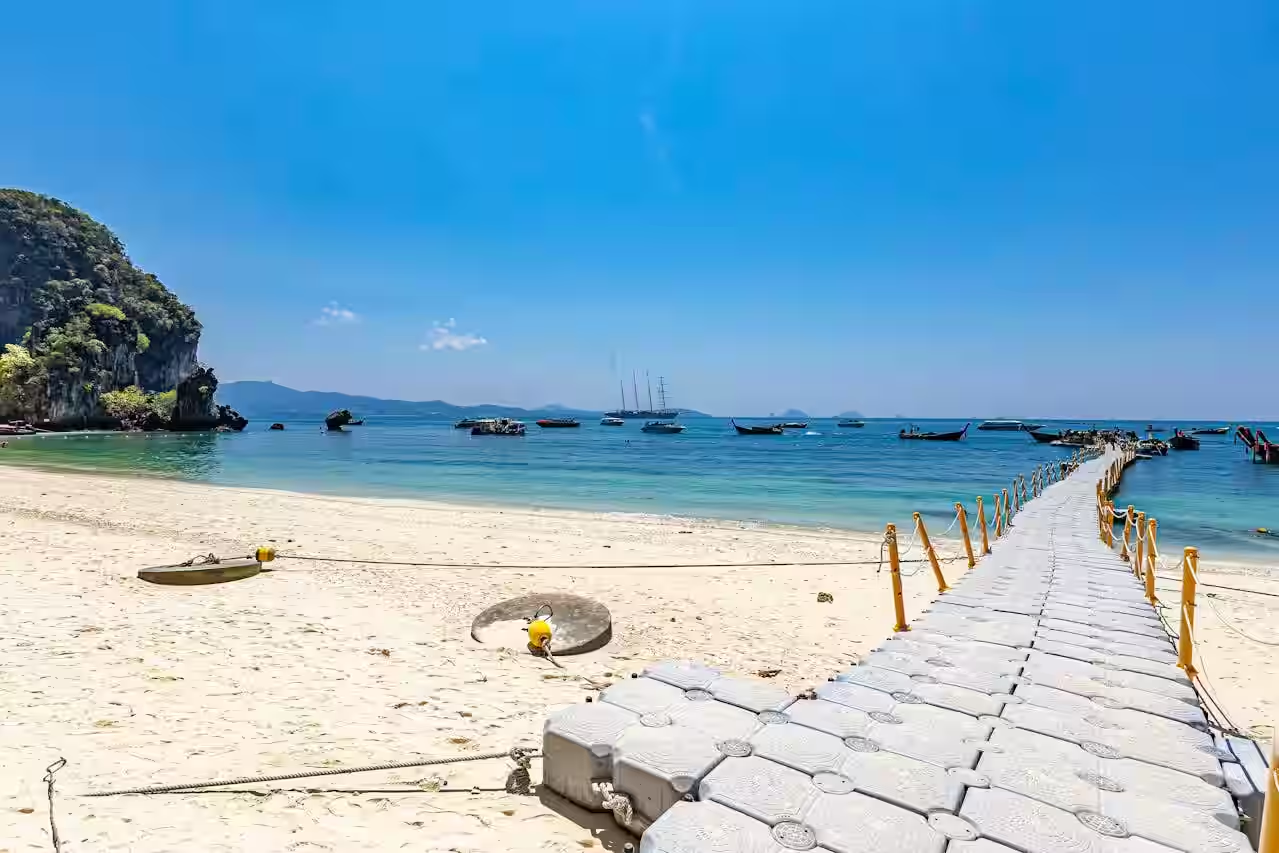
Laem Thong is an almost 1km-long white powdery sand beach located in the far north of Phi Phi Don. It’s basically cut off from the other parts of Phi Phi, so your experience would be nothing like the typical Phi Phi visit — no parties, loud music, and not even that many hotels, only peace and serenity.
Getting here independently means a 20–30 minute longtail from Tonsai (around 600–800 THB charter). The north end of Laem Thong has a small Chao Ley (Sea Gypsy) village — the indigenous community that has fished these waters for generations. Respectful visitors are welcome, but this isn’t a tourist attraction. Walk slowly, don’t photograph people without asking, and remember you’re in someone’s neighbourhood.
The Beaches of Koh Phi Phi Leh
Maya Bay — How to Visit It Right in 2026
Maya Bay needs no introduction. What it does need is some honest context.
Maya Bay is open for visitors in 2026, but closes annually for conservation — in 2026, it will be shut from 1 August until 1 October. Check before you book. Many travellers arrive to find it closed and have no backup plan.
Access is via boat landing at Loh Samah Bay, with a five-minute boardwalk to the beach. No boats are permitted inside Maya Bay itself. This is a significant improvement over the pre-closure era, when hundreds of boats anchored directly inside the bay and the coral was destroyed.
The National Park fee is 400 THB for adult foreigners and 200 THB for children. Some tours include this; many don’t. Always check before booking.
Swimming in Maya Bay is forbidden — you can only wade to knee depth. Rangers are present and will fine repeat offenders. The ban exists to protect the blacktip reef sharks that breed in the shallow water. On a good day, you can spot juveniles gliding through the shallows from the shore.
The honest trade-off: Maya Bay is genuinely beautiful — soft white sand, dramatic enclosed cliffs, impossibly clear water. It’s also extremely popular, and even with daily visitor limits, you’ll share the space with a lot of people. The experience is best early in the morning, before the main flotilla of speedboats arrives from Phuket and Krabi. If you’re based on Phi Phi Don, book a sunrise departure from Tonsai — most operators leave by 6–6:30am. You’ll have at least 30–45 minutes at Maya Bay before the crowds arrive.
Island tours covering Maya Bay are covered in more detail in our guide to things to do on Phi Phi.
Pileh Lagoon — The One That Rivals Maya Bay
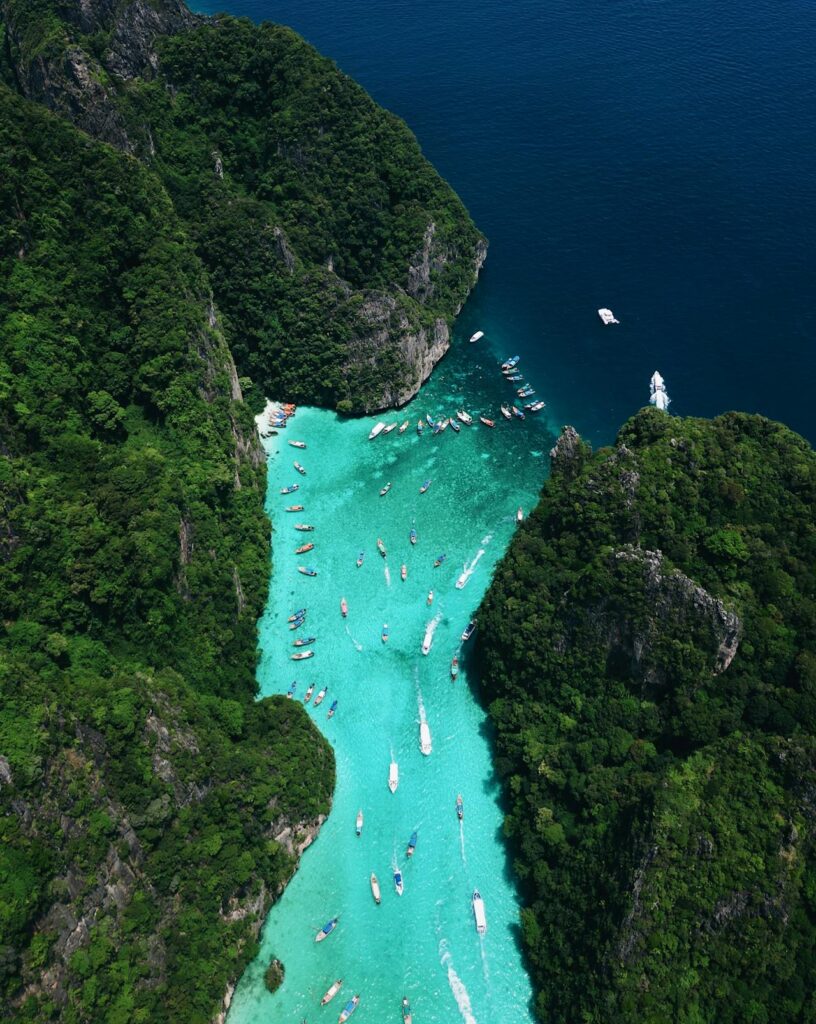
Most visitors know Maya Bay. Far fewer linger at Pileh Lagoon — which is a mistake.
Pileh is an enclosed emerald lagoon on the east side of Phi Phi Leh, ringed entirely by towering limestone cliffs. There’s no beach here — just rock walls plunging into water so clear you can see 8–10 metres down. Day-trip boats typically stop for 20–30 minutes. Charter a private longtail and you can stay as long as you like.
The same 400 THB national park fee covers both Maya Bay and Pileh Lagoon — it’s one entry, not two separate charges. If you’re on a group day tour that stops at both, make sure the fee is included in your booking.
For more detail on visiting Pileh, see our dedicated Pileh Lagoon guide.
Monkey Beach — Worth a Stop, Not a Stay
Monkey Beach sits on the north coast of Phi Phi Don, accessible only by boat (around 150–200 THB return from Tonsai). The beach itself is small and not great for swimming.
The macaque colony that lives here is bold, well-fed by tourists, and sometimes aggressive. Do not bring food. Do not reach toward them. Do not hand them anything. Wild monkeys bite, and a bite requires immediate medical attention — the nearest proper hospital is in Krabi or Phuket. A quick 20-minute stop is fine. Don’t try to feed, pet, or take selfies by grabbing a monkey.
Bamboo Island — Half a Day Done Properly
Bamboo Island (also known as Koh Pai) is the most north-easterly island of the Phi Phi archipelago. The beach here is excellent — long, flat, lightly developed, with calm water ideal for swimming. It’s usually included in day tours departing from Phi Phi Don or Phuket.
Go in the afternoon if you have a choice. Morning tours from Phuket and Krabi tend to arrive in the late morning, so a post-lunch arrival means a far quieter beach.
When to Visit Phi Phi Islands Beaches
November to April is peak season. The Andaman Sea is calm, skies are clear, and visibility for snorkelling is at its best — often 15–20 metres. Expect the highest hotel prices and the largest crowds, particularly December through February.
May to October is monsoon season. Waves are larger, rain is more frequent, and several boat routes reduce their schedules or cancel entirely in rough weather. That said, May and early June are often workable — the rains haven’t fully arrived yet and prices are notably lower. The off-season is a great time to visit more economically, and if you’re lucky with weather, it can be a fantastic experience.
July and August see heavy swell on the west coast beaches. Maya Bay also closes annually during August–September. If these are your only travel months, manage expectations accordingly.
A Realistic Day on Phi Phi’s Beaches
Here’s how a well-planned beach day looks for a traveller based at Loh Dalum:
6:00am — Board a longtail at Tonsai Pier for Maya Bay (book the night before through your guesthouse or any tour operator in the village). Sunrise tour costs around 1,200–1,500 THB including the national park fee.
7:00am — Arrive at Maya Bay before the Phuket speedboats. 30–45 minutes at the beach, wade in the shallows, spot sharks.
8:30am — Swing through Pileh Lagoon on the return trip. Another 20–30 minutes in the emerald water.
10:00am — Back at Tonsai. Breakfast at any of the village cafés (full Thai breakfast 80–120 THB).
11:00am — Longtail taxi to Long Beach (150 THB). Snorkel, swim, and relax until early afternoon.
2:00pm — Walk the 15 minutes from Long Beach to Loh Moo Dee. Have it mostly to yourself.
4:30pm — Boat back to Tonsai, cold drink at Loh Dalum as the tide comes in.
Total cost excluding accommodation: roughly 1,800–2,200 THB (≈ $50–$65 USD). An honest, full day.
One Genuine Caution: The Sun and the Currents
Phi Phi’s beaches look idyllic, but the Andaman sun is brutal year-round. UV levels are high enough to cause serious sunburn in under 30 minutes on pale skin — and on a boat between beaches, there’s no shade. Bring SPF 50, a long-sleeved rashguard, and a hat. This is not optional.
On the ocean-facing sides of Phi Phi Don — particularly the south coast near Long Beach and the west coast around Nui — currents can be strong in the afternoon, especially from May to October. If you see locals not swimming, take the hint. No lifeguards operate on any Phi Phi beach.
Plan Your Phi Phi Beach Trip
Whether you’re based here for a night or a week, the best beach days on Phi Phi come down to timing: early morning for Maya Bay, mid-morning for snorkelling at Long Beach, and golden hour at Loh Dalum. Get that sequence right and you’ll see why people keep coming back.
Frequently Asked Questions
What is the best beach on Phi Phi Islands?
It depends what you want. Maya Bay on Phi Phi Leh is the most visually dramatic, but swimming is prohibited. For swimming and snorkelling from the sand, Long Beach is the top pick. For peace and complete seclusion, Loh Ba Kao or Laem Thong are hard to beat. Loh Dalum is the most convenient if you’re staying in Tonsai Village.
Do you have to pay to visit Phi Phi Islands beaches?
Most beaches on Phi Phi Don are free to access. However, visiting Maya Bay and Pileh Lagoon on Phi Phi Leh requires a National Park fee of 400 THB (adults) and 200 THB (children) for foreign visitors. This is often included in organised tour prices — always confirm before booking.
Can you swim at Maya Bay in 2026?
No. Swimming is not permitted inside Maya Bay to protect the recovering coral reef and blacktip reef shark population. Visitors can wade to knee depth only. Rangers are on-site and fines apply for non-compliance. Maya Bay is also closed annually — in 2026, from 1 August to 1 October.
Which Phi Phi beach is best for snorkelling?
Long Beach has accessible house reef directly off the sand and is the easiest spot for independent snorkelling. Loh Moo Dee also has a good reef with fewer people. For the best underwater scenery overall, a guided snorkelling trip to the waters around Phi Phi Leh — including Pileh Lagoon — is worth the cost.
How do you get between beaches on Phi Phi Don?
By longtail boat taxi, almost exclusively. Most beaches are not connected by road. Expect to pay 100–300 THB per person per single journey, or charter a longtail for 500–1,500 THB for a half-day. Long Beach is reachable on foot from Tonsai in around 30 minutes via a coastal path. Loh Moo Dee can be reached on foot from Long Beach in another 15 minutes.
When is the best time to visit Phi Phi beaches?
November to April offers the clearest skies, calmest seas, and best visibility for snorkelling. December to February is peak season with the highest prices and most crowds. May and early June offer a reasonable middle ground — quieter and cheaper, with mostly decent weather before the monsoon properly arrives.